FordParts
My Garage
My Account
Cart
OEM Lincoln Blackwood Car Batteries
Auto Battery- Select Vehicle by Model
- Select Vehicle by VIN
Select Vehicle by Model
orMake
Model
Year
Select Vehicle by VIN
For the most accurate results, select vehicle by your VIN (Vehicle Identification Number).
1 Car Batteries found
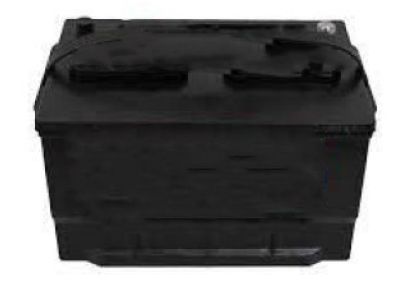
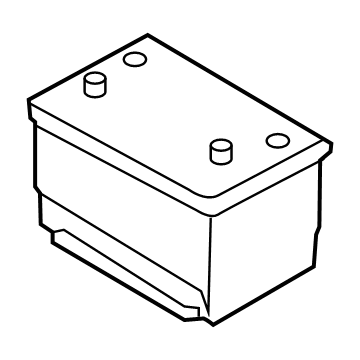
Lincoln Blackwood Battery Part Number: BXT-65-650
$183.53 MSRP: $199.95You Save: $16.42 (9%)
Lincoln Blackwood Car Batteries
OEM Car Batteries boasts unmatched quality. Each part goes through full quality checks. They adhere to Lincoln's official factory standards. These steps remove flaws and inconsistencies. So you can get Car Batteries with long life and a perfect fit. Come to our website and find genuine Lincoln Blackwood parts. We keep a wide inventory of OEM Blackwood parts at the highly affordable prices. It's easy to search, compare, and pick what you need. You'll love the clear info and simple checkout. We offer top-rated customer service, and we reply fast. We also ship promptly to ensure your order arrives on time.
The Lincoln Blackwood Car Batteries are however known to offer the premier performance and reliability and they would be instrumental in the functioning of the luxury pickup truck. Manufactured to fit the Lincoln Blackwood perfectly, these Car Batteries create excellent spark for ignition, power all the circuits in the car while maintaining its voltage strength; all of which are very important to keep the car running efficient and safely. Having had Conventional Flooded Lead-Acid (FLA) batteries to start with, the Lincoln Blackwood now uses FLA Maintenance-Free as well as Absorbed Glass Mat (AGM) Car Batteries. These AGM batteries are quite popular in the automotive segment because of their symbiosis feature in which the electrolyte is contained in a mat so that spilling is eliminated and safety is boosted. They also give a higher rate of charge and more start facility which is handy for Lincoln Blackwood Internet robust 5.4 L Intech DOHC V8 motor. Organizational compatibility with different Blackwood models is special because these Car Batteries satisfy all unique requirements of the vehicle configuration. Additional characteristics like Cold Cranking Amps (CCA) and Reserve Capacity even improves the efficiency of Lincoln Blackwood for cold climate operation with parts switches on and for maintaining the part loads while the engine of the vehicle is off. In general, the Lincoln Blackwood Car Batteries further improve its performance and security and strengthen its image as a powerful and hi-tech luxury pickup.
Lincoln Blackwood Car Batteries Parts and Q&A
- Q: What Precautions Should Be Taken When Handling Car Batteries to Prevent Personal Injury on Lincoln Blackwood?A:The explosive gases produced by batteries can lead to personal injuries thus requiring you to keep the battery area free from all flames and lighted substances and protected with face shields while safeguarding your eyes and maintaining proper ventilation. Depletion of the back up power supply must occur prior to any work on front or side Air Bag supplemental restraint system components as well as air bag sensor-related components including doors, instrument panels, consoles, door latches, strikers, seats and Hood Latches to prevent deployment accidents that could lead to injuries. Disconnect the battery ground cable and wait at least one minute after which disconnect any auxiliary batteries and power supplies when they are equipped. Twist the nuts to secure the holder at the end of the test and handle the battery carefully by gripping opposite corners to stop acid flow through the vent caps. Battery carriers or hand positions to avoid damaging the battery by applying unnecessary force to the end walls. Children should never access batteries because the contained sulfuric acid requires protection from skin and eyes as well as clothing. Eye protection should be worn at all times when you are close to the battery to prevent acid ingress. In case of skin or eye contact with acid you need to wash affected areas with water for at least 15 minutes while seeking medical help. A physician must be contacted right away when someone ingests acid. The first step to remove a battery is taking off the battery ground cable followed by disconnecting the positive battery cable. The correct method to install the battery involves doing the opposite steps from removal. Some unusual driving symptoms will appear after disconnecting and reconnecting the battery because the vehicle needs to learn its adaptive strategy which takes time for completion while driving.

Related Lincoln Blackwood Parts
 Lincoln Blackwood Alternator
 Lincoln Blackwood Alternator Pulley
 Lincoln Blackwood Battery Cable
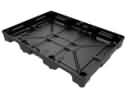 Lincoln Blackwood Battery Tray
 Lincoln Blackwood Starter
 Lincoln Blackwood Voltage Regulator